Use of Facial Recognition Technology Tests Balance of Security, Privacy

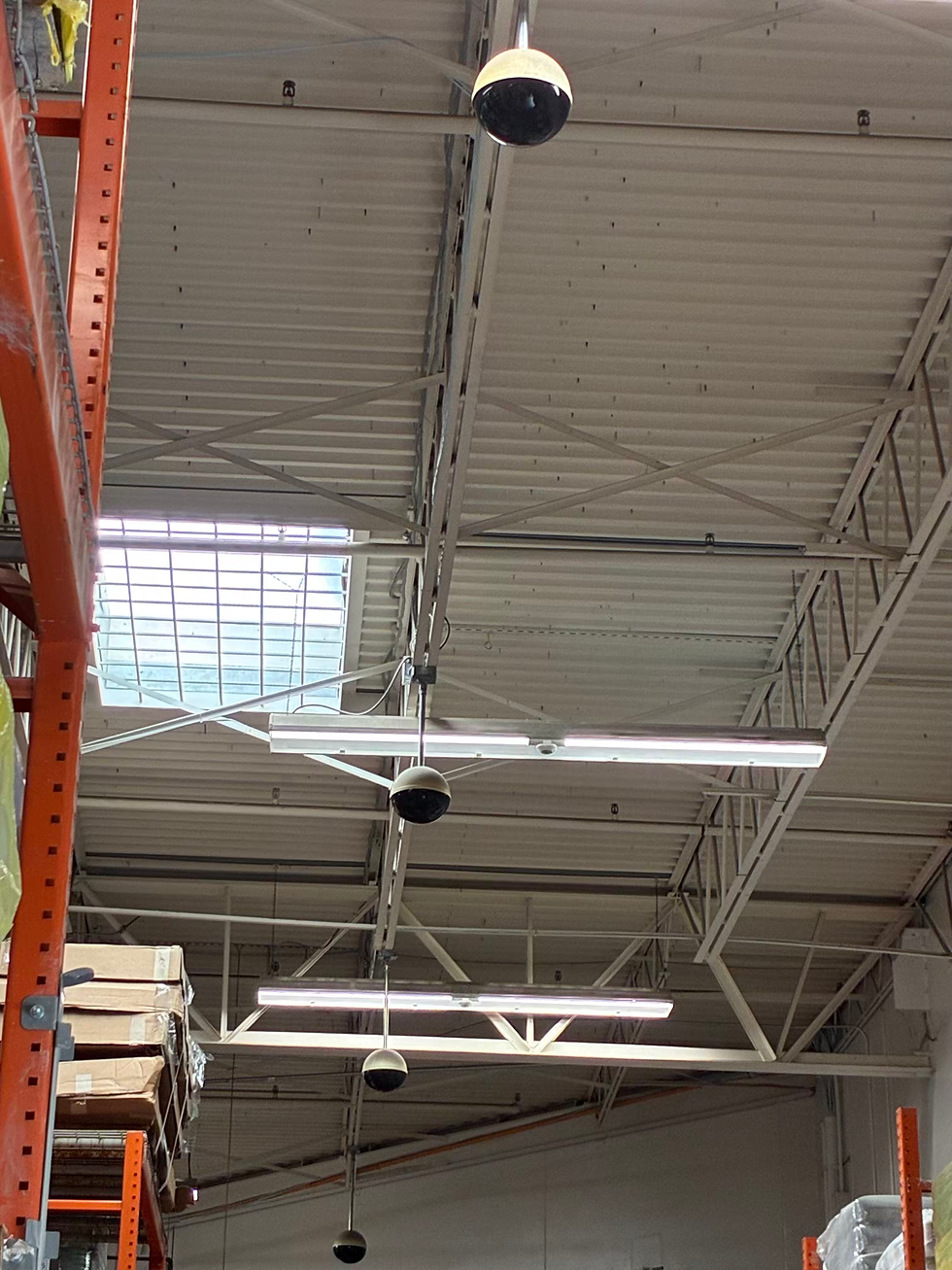
It would be a hard task to find a business in Southington that does not use cameras to monitor its premises. Whether a small family-owned business or a large corporation, many employ forms of surveillance technology.
Security cameras are not a new thing. What is new is the ability to link these cameras to a nationwide network with sophisticated software that can identify and track individuals using facial recognition technology.
The obvious use for this technology is preventing shoplifting. But at a certain point, questions arise. How much data collection is too much? Who controls it? What is it used for? And does it respect the Fourth Amendment of the US Constitution, which says, “The right of the people to be secure in their persons, houses, papers, and effects, against unreasonable searches and seizures, shall not be violated.”
One local business that uses cameras with facial recognition technology is ShopRite on Queen Street:
“Our stores are equipped with cameras that collect and process your biometric data (face geometry) solely to help prevent and respond to unlawful or disorderly activity in its stores, such as theft and threats to customer and employee safety. Your biometric data is stored only as an encrypted face template which cannot, on its own, be used to identify you,” reads a statement on ShopRite’s website.
Home-goods retailers Home Depot and Lowes list facial recognition as a technology they use on their properties, but do not list which specific stores have it.
Other national chains with a presence in Southington such as Stop and Shop, Walmart, BJ's, Price Chopper, Cumberland Farms and 7/11 deploy cameras throughout their property and reserve the right to forward footage to law enforcement who can use facial recognition. They do not mention cameras with designated facial recognition technology as something they employ in their privacy statements.

While facial recognition can certainly be used to combat shoplifting, individuals and organizations such as the American Civil Liberties Union (ACLU) have raised concerns about potential abuse of such technology.
While the ACLU does not mention stores with Southington locations by name, it claims that facial recognition technology can do more harm than good.
“Face recognition is an enormously powerful surveillance and tracking technology that continues to lack broad public acceptance and legitimacy,” reads an ACLU analysis. “If enough companies deploy this tech in enough stores, it could become a mass surveillance machine able to locate anyone who steps foot in a wide variety of establishments anywhere in the United States.”
The ACLU says that consumers have been falsely accused and accosted at grocery stores across the country. The same analysis also points out that facial recognition cameras often misidentify Black individuals and other people of color.
“[Facial recognition] is unreliable, disproportionately imprecise in evaluating the faces of Black people and other groups, and has been the subject of misuse by companies and law enforcement alike, with at least 10 publicly reported cases of people, nearly all Black, suffering false arrests based on face recognition errors,” reads the ACLU analysis.
The Connecticut legislature is aware of such concerns, says State Representative Chris Poulos. Poulos was among 141 state representatives who voted to pass SB4 into law.
SB4, or An Act Concerning Consumer Privacy and Protection, is not the first act aimed at protecting consumer privacy in Connecticut, but it is one of the broadest and most encompassing.
SB4 provides an avenue for consumers to ensure their private data is deleted by corporations through the Attorney General’s office. It also prohibits the sale of consumer data, and places guidelines and restrictions on the use of facial recognition technology.
Effective on October 1, businesses with facial recognition technology in place must use clear signage to alert consumers and only use images and video captured to match with their own database.
“I would say that this is a first step in addressing people's concerns about privacy,” said Poulos. “A lot of these things are allowed by law, but as the technology gets more advanced, the most important thing is to maintain the public trust.”
However, some opponents of SB4 say the bill does not go far enough in addressing the root cause of privacy concerns.
State Senator Rob Sampson was one of four senators who voted against the bill. He says SB4 does not outline how data collected in stores will be kept safe from overreach by the government.
“SB 4 addressed automated license-plate-reader information, facial recognition and geolocation, but it did not resolve the larger civil-liberties problem created when government has access to technology capable of tracking and cataloging the movements and activities of innocent people. I support law enforcement. I also believe government surveillance must be constrained by due process, legitimate investigative need and meaningful privacy safeguards,” said Sampson.
Sampson also says that while consumers should be wary of any corporation with access to their data, they should also be concerned with the government having access to such information.
“I don't believe corporations should track, catalog, sell or misuse your personal information, and I certainly don't believe government should get a free pass to do it,” said Sampson.
As the technology addressed in SB4 is rapidly changing and developing, Poulos says it is important for lawmakers to hear from the public about what specific concerns they have.
“With emerging technology, there has to be a conversation,” said Poulos. “There has to be due diligence, research and public input about what society is going to deem acceptable use.”