top of page
											CREATIVE COMMONS STOCK PHOTO
CREATIVE COMMONS STOCK PHOTO

“Young people today are different.” Yes, it seems every older generation always says that. We also like to say, “when I was a kid, we walked to school, carried our lunch, were always outside…” While all of this may be a cliché, the harsh reality is that we are experiencing a dramatic increase in social, emotional, and mental health issues, as well as substance abuse and suicide, compared to previous generations. Should we be concerned about this? What has caused it? Is there anything we can really do about it? 


Jonathan Haidt, in his recent book The Anxious Generation, addresses many of the questions mentioned above. Members our Southington school system read his book a year ago, and it warrants a public airing. I have already discussed the issues raised in Haidt’s book at our Southington public library class on January 17.


Haidt points out that around 2009 some dramatic changes started appearing in young people, changes that can be tied to internet technology: cell phones, social media, and video games. I was still teaching at SHS then, and I saw changes in how students interacted with each other and with me – as well as an increase in suicide attempts, substance abuse, and mental health challenges. Haidt also cites evidence for physical changes in the developing brains of young people as a result of these technologies.


Technological progress makes our lives easier, enhances communication and connection in the world, and vastly increases the availability of information. Yet it also produces negative impacts. Tech companies study how to deliver quick rewards to young people, dopamine hits that keep them hooked. Many for-profit companies intentionally seek to hook young people, thus altering brain and cognitive development, and increasing rates of anti-social behavior.


While many parents were thrilled to find that smartphones or tablets could keep a child happily engaged and quiet for hours, few understood the mental health, developmental and socialization damage that was being done. The frontal cortex of our brains, essential for self-control, delaying gratification and resisting temptation, is not fully developed until the mid-20s, and preteens are particularly vulnerable. Gen Z became the first generation ever to go through puberty with a portal in their pockets that called them away from the people nearby and into an alternative universe that was exciting, addictive, unstable, and often unsuitable for children and adolescents. 


The average young person today spends five hours a day on the internet. COVID isolation did not help, either. No wonder that student self-reports of feeling isolated or lonely have escalated.


When studies started to show this, many parents and adults went into defensive denial. Few realized that the developing brains of impressionable young people were being rewired. Social media inflicted damage on girls, while video games, porn, and gambling damaged boys. In-person physical play and socialization were replaced by addictive internet content.


In addition to the Great Rewiring of Childhood, as Haidt describes it, parents have also became overprotective of their children, restricting their autonomy in the real world. Fears of kidnappers and sex offenders reduced free, unsupervised outdoor play. As a phone-based childhood replaced a play-based childhood, more young people prefer to stay indoors and play online. There some wandered into adult internet content with little adult supervision. Some even looked for emotional support in AI or online, with some shockingly negative consequences. The indoors is not much safer than the outdoors.


Haidt describes a grim situation. A law passed in 1998 called COPPA was supposed to protect children by requiring consent, and 13 became the “internet age” as a result, but it is easy to bypass this barrier.


Still, Haidt also suggests some other specific actions we as a society can do to counter this. I will talk about some of these ideas in my next column.


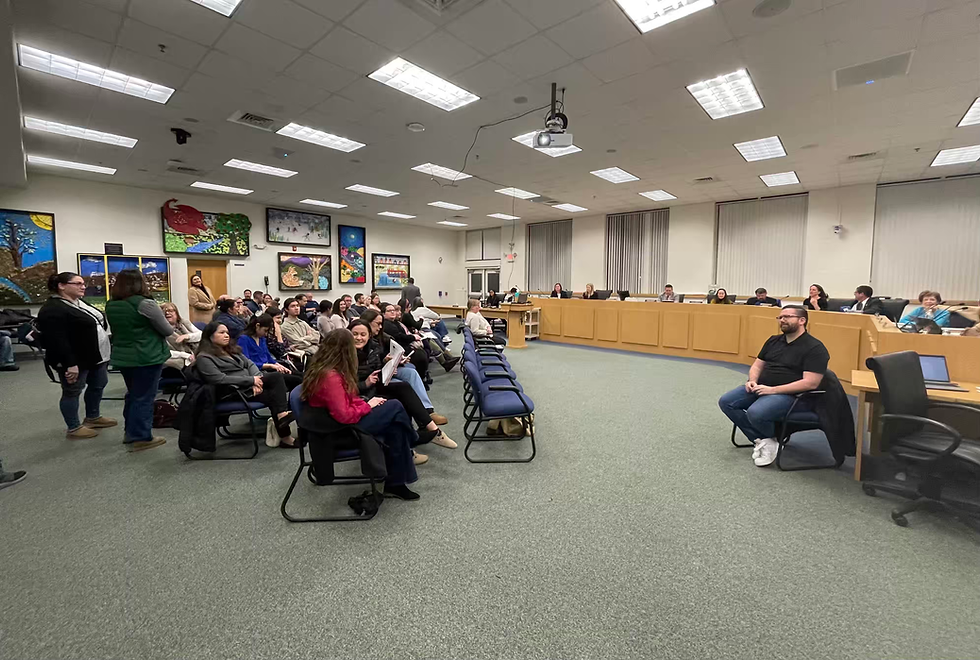
											PHOTO COURTESY OF BOB BROWN
PHOTO COURTESY OF BOB BROWN

"Why can’t kids today be like I was growing up? They are not like I was!” 


Every generation could say this, but it seems young people today face unique challenges. Cell phones, iPads, busy parents, social media, Covid isolation, increased information availability, and an at-times overly hostile or divided social-political environment all have brought new challenges many of us did not face growing up. How have these factors changed students?


I went on a field trip recently with my granddaughter, who is in fourth grade. I noticed that the vast majority of students had very short attention spans, did not read much, and seemed to need constant stimulation in the museum we were in. This got me to thinking.


As a teacher friend and parent recently explained to me, many young people today are more open about expressing emotions and feelings. That is wonderful – while growing up in the 1950s, I was discouraged from any such expressions.  


However, as several other parents and teachers have told me, more students are anxious, face more social and emotional challenges, have shorter attention spans, need more instant gratification and excitement, and read fewer books. More have difficulty relating to other kids and working through conflicts without parental intervention. 


Loneliness and even hopelessness are also on the rise.  The U.S. Department of Health and Human Services reported that the number of high school students reporting persistent sadness or hopelessness rose 40% between 2009 and 2019. Some of the factors driving this trend include the rise in social media and smartphone use, increasing academic and social pressures, and growing competition in college admissions. 


There is a book by Jonathan Haidt, The Anxious Generation, that explains some of this and has several suggested solutions. He suggests that schools restrict or eliminate cell phones, that parents wait until high school to give their children smartphones, and wait until age 16 for social media access. He also suggests parents encourage more outside, unsupervised play for children. 


Limiting cell phone use may help, but the reality is that outside school they will still be influential. We still need to adjust teaching and parenting.


First, we must meet students where they are and not try to take them back to the “good old days.” This is for parents, educators and society in general. That means parenting and teaching need to evolve – after all, we no longer need to teach most kids how to milk cows or work on an assembly line. Southington's and many other towns' schools are evolving, and we must continue to do so.


Students should also be encouraged in school to interact with and respect others and do small group activities. Schools need to ensure that they have sufficient mental and social-emotional support personnel. Community support for that is essential. Parents and society need to encourage our young people to go outside and play, engage in sports, do social activities, dance, appreciate nature, be creative with music and arts, resolve their conflicts amongst themselves and not rely on adult interventions always.


Finally, we should foster curiosity and a thirst for learning and growing. Teach kids to respectfully and thoughtfully question everything – the status quo, the way things are done, rules, authorities. Encourage expressing emotion and listening as important skills. Instead of always trying to change them, approach children with curiosity about their world, about any traumas they may have experienced, and learn what makes them tick. 


Our young people are our future. They are the potentially productive workers and involved citizens of tomorrow. Our society needs them to succeed for us to all thrive. 


Bob Brown is a longtime Southington teacher and current Board of Education member.

  • Alana Wasserman
  • Oct 31, 2025

There is a Jewish folktale about helping those in need that was turned into a children’s book called “Bagels From Benny” by Aubrey Davis (Bagels from Benny | Aubrey Davis). In the book version, Benny is grateful for the bagels his grandfather makes, so he decides to thank God by placing some bagels in the holy ark where the Torahs are kept. At the same time, there is a poor man in the synagogue. He finds the bagels in the ark, grateful that God has provided him with food. Benny thinks he is feeding God, and the hungry man thinks that God is feeding him. In the end, they realize what is actually happening, and Benny understands that he is doing holy work by helping someone in need.


Today, we are reminded that it is our responsibility to be like Benny, and continue this holy work. SNAP benefits have been halted due to the government shutdown, causing many people to struggle to put food on the table. We need to do the holy work of feeding those in need. Food banks and shelters are preparing for an influx of people, and they need more donations of food, money, and volunteers. Now is the time to help our fellow man.


At Gishrei Shalom Jewish Congregation in Southington, we offer plenty of opportunities throughout the year to help our fellow man. At Yom Kippur and Purim, we host a food drive, in which all donations go to Bread for Life. On Christmas day, we prepare and serve Christmas lunch with Bread for Life. And once a year, we pack bags filled with toiletries for Dignity Grows, a program which helps homeless women.


It says in Deuteronomy 15:7-8, “Do not harden your heart and shut your hand against your needy kinsman. Rather, you must open your hand and lend him sufficient for whatever he needs… Give to him readily and have no regrets.” By opening our hands and our hearts, we help to make the world a better place.


© 2025 The Southington Outsider        Logo image by CTDroneSource 


We pledge that all writing and images produced by staff of The Southington Outsider are created by humans, not by AI. We recommend, but cannot guarantee, that user-submitted Opinions, Tributes and Posters adhere to this policy. 


The Southington Outsider does not collect, use or share any individually identifiable data related to your browsing of this site. Wix, our hosting platform, has a separate privacy policy

bottom of page