Town Weighs Whether To Bill Drivers’ Insurance for FD Costs
- Philip Thibodeau
- Apr 23
- 4 min read
At its February 6 meeting, Southington Ordinance Committee member Steve Kalkowski reported on some interesting research he had conducted. It involved a vendor that would allow the Town to bill the insurance companies of drivers for services rendered by the Southington Fire Department at incidents on local roads.
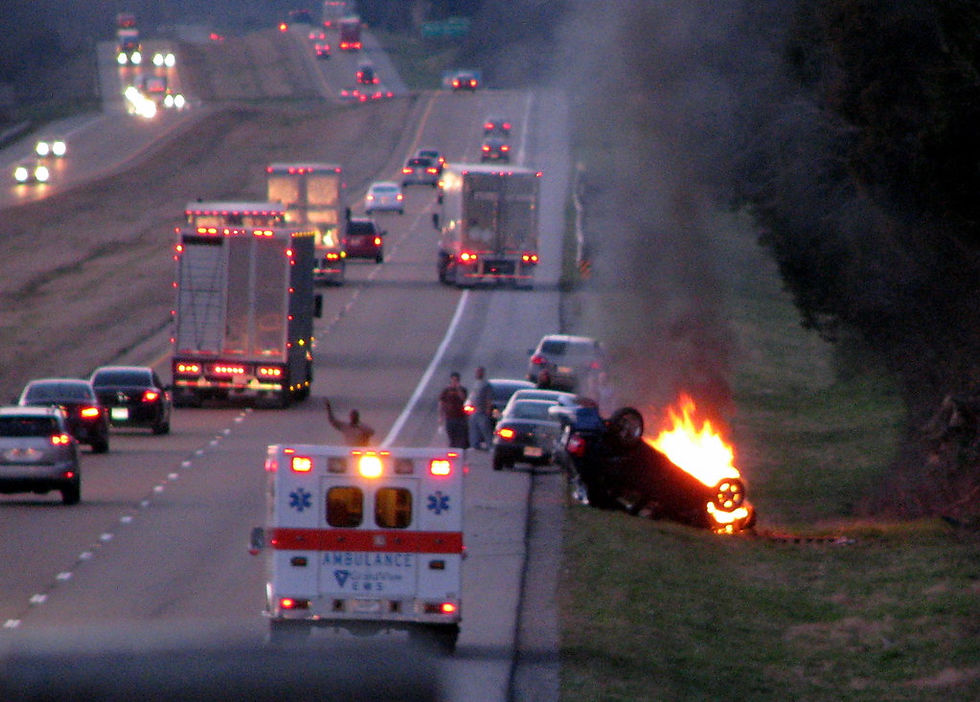
Kalkowski presented the following case: Each year there are between 400 and 500 vehicle accidents on town roads and highways (including I-84 and I-691) which the Southington Fire Department responds to. Some responses involve monitoring the accident to make sure there is no vehicle fire, while others are more intensive, involving, say, an extrication. All of these calls cost money – about $700 to $1,200 dollars each.
Kalkowski had heard about a nationwide vendor that helps towns recover some of these costs by sending bills to the insurance companies of the at-fault driver, or the drivers themselves, if they are uninsured. The vendor claimed that the companies pay about 70% of these submissions. The firms takes 22% of this payment as its fee, and sends the town the other 78% in a lump-sum payment at the end of each month.
The new revenue could be substantial. For example, if there were just 200 payments per year of $700 each, that would mean, after the vendor’s cut, the town would receive $109,200 per year. That figure is very close to the cost of one firefighter once salary, benefits, and retirement are figured in.
After the briefing, committee members weighed the idea. The initial response was quite favorable – it was, in a sense, free money.
But then potential issues began to bubble up. Commissioner Lisa Cammuso pointed out that it would seem unfair for town residents who already pay taxes for Fire Department services to have to pay additional monies, either directly or via their insurance – and for a service that they cannot even opt out of. A few members wondered whether it be more fair to exclude town residents, and only charge non-residents. Kalkowski cautioned that it was best to avoid the complications such a distinction would entail.
During public comment, one resident said that it was a slippery slope – that once you start charging for one kind of Fire Department service, it is just a matter of time before financial pressures lead to more charges for services that people have taken for granted.
Not wanting to rush a decision, Chair Tony Morrison asked that members of the Committee give the matter more thought, and asked Kalkowski to see whether any other towns in Connecticut that recover expenses like this could share their experience.
Fire Recovery USA Joins the Conversation
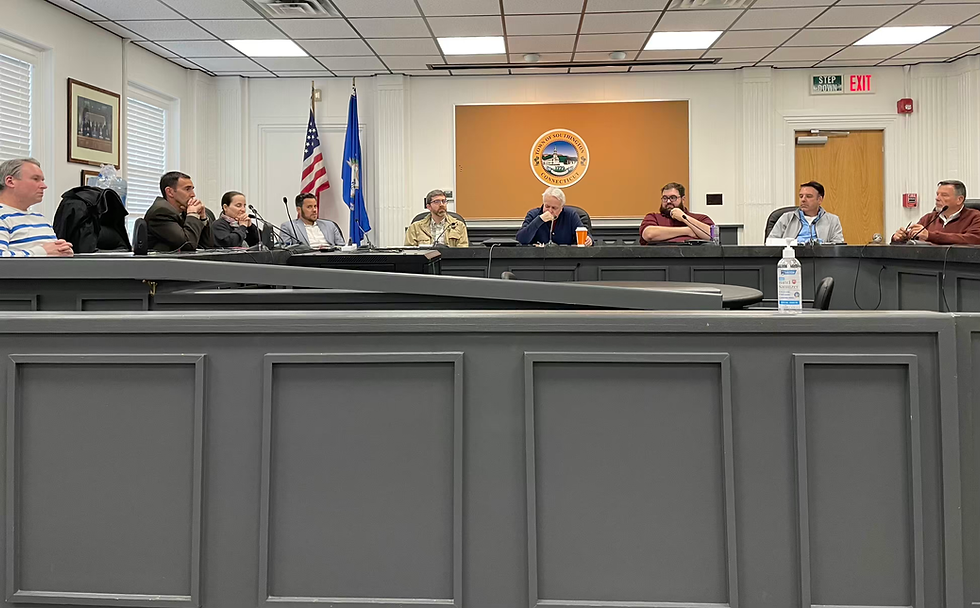
The Ordinance Committee brought up the matter again at its April 22 meeting. This time, three more experts joined the conversation. In the front row, Southington Fire Department Chief Scott Lee was joined by New Britain Fire Department Chief Raul Ortiz, who had come to report on New Britain’s experience with the cost-recovery system. On the speakerphone was Mike Rivera of Roseville, California. Rivera is the Chief Business Development Officer of Fire Recovery USA, a firm that offers the recovery service.
Rivera began by making a pitch for his company’s services. He said that over 2,000 fire departments in 43 states are served by companies in his industry. He stressed that there would be no cost to the town to start the service or to quit. All that would be required would be for someone in the Fire Department to spend a few minutes inputting data collected at the scene of an incident by the Police Department. In addition, the town would need to pass an ordinance spelling out the policy of charging for services rendered by the Fire Department.
Rivera also made an interesting claim: most auto insurance policies, he said, already cover expenses associated with fire fighting, which means some percentage of every driver’s premium is reserved for this purpose. All his firm is doing is asking the companies to make good on their policy obligations.
At that point Commissioner Chris Palmieri asked Rivera: if that is the case, isn’t it a violation for insurance companies not to be paying for fire department services already?
Rivera replied that insurance companies typically deny such claims, and that it takes some expertise to file a claim in such a way that it gets paid – expertise that Fire Recovery USA possesses.
He also asserted that while insurance companies can raise a driver’s rates for being in an accident, they cannot raise them further just because of an “extra bill” like this one. At several points he claimed that implementing a cost-recover program would have no specific impact on the rates paid by drivers in the area.
New Britain Shares Its Experience
Finally the Commission invited Chief Ortiz to speak about New Britain’s experience with the program. Ortiz did not voice any complaints about the service, and said that it does work. However, he said, New Britain only receives about $25,000 per year in reimbursements – about one-tenth of the amount, $245,000, that Rivera said that Southington could take in if it contracted with his company.
Ortiz said there were two reasons for this relatively low level of revenue. First, New Britain does not put in claims for incidents involving residents, or the uninsured. Second, there is constant turnover at the position of the person responsible for submitting reports to Fire Recovery; as a result, it takes them some time to get into the habit of sending in the information, and the process is “not efficient.”
A Recommendation To Consider
While some questions remained, many were answered. If Rivera could be believed, adoption of the service would not have any impact on the premiums paid by drivers who are involved in incidents on Southington’s roads. The town would have another revenue stream, though not necessarily a large one. Chief Lee and Captain James Armack of the Southington Police Department also confirmed that it would be feasible for the Police Department, which collects information on drivers and their insurance at accidents, to pass that information along to the Fire Department for submission.
All of the members of the Committee voted to refer to the Town Council a recommendation that it consider using Fire Recovery USA’s services to bill the insurance companies of all drivers who require Fire Department assistance after incidents on Southington roads.
Editor's note: the original version of this article incorrectly gave the name of Commissioner Steve Kalkowski as Steve Walowski. We regret the mistake.