


Sign Pro v. Town of Southington: The Annex Facility Controversy
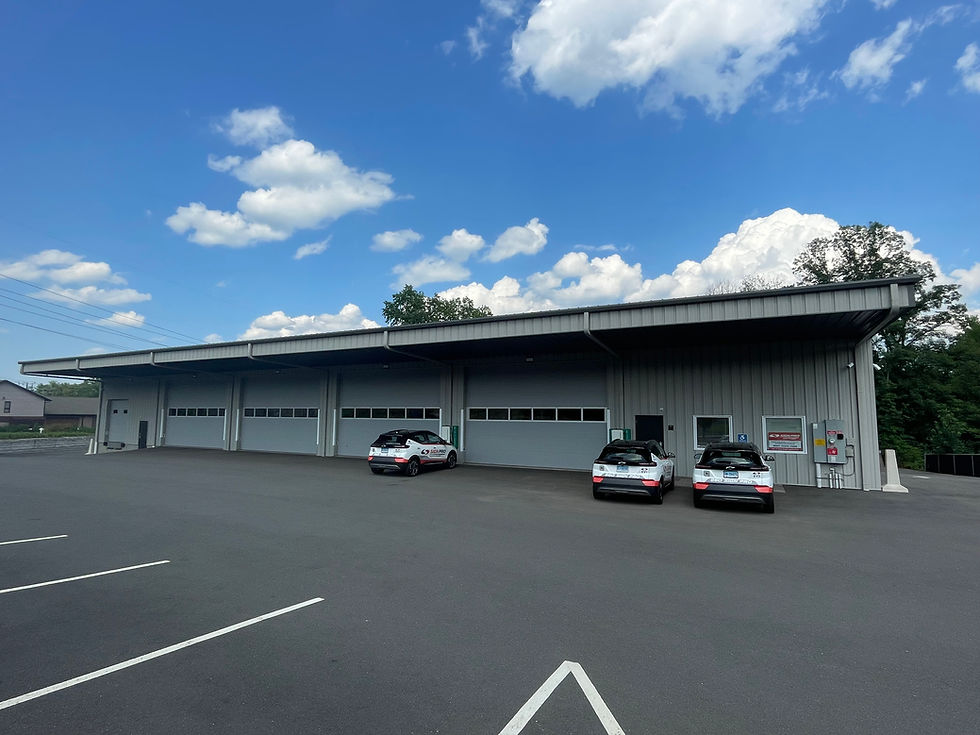
A key point of contention in the ongoing lawsuit between Sign Pro and the Town of Southington concerns the parties’ actions during Sign Pro’s effort to build a new storage facility on Canal Street. The 13-month long back-and-forth over permits for the facility has become one of the case’s main controversies. It is the earliest instance cited by the company, and the one that it claims cost it the most money. It also features prominently in an interview on the lawsuit Sign Pro President Peter Rappoccio gave WTNH's Dennis House in 2024. We have gone into the details of this incident to help our readers understand the nature of the legal questions raised by the case. It is not meant to be a complete account of the case; rather, it is meant to complement our reporting on Sign Pro's business model and the timeline of the affair.
The case of Sign Pro v. Town of Southington now lies in U.S. District Court. Judge Stefan R. Underhill will soon have to decide whether it ends, moves toward a settlement or proceeds to trial.
The History of the Annex Facility
Sign Pro bought the property at 161 Canal St. in 2020 primarily for additional storage. On November 16, 2020, contractor GR Engineering of Thomaston filed a building permit application on behalf of Sign Pro with the town of Southington. The application described a 15,000 square foot low-hazard equipment storage facility. The drawings submitted with it showed four garage doors. It listed an estimated construction cost of $495,000 plus $7,908.70 in permit and related fees.

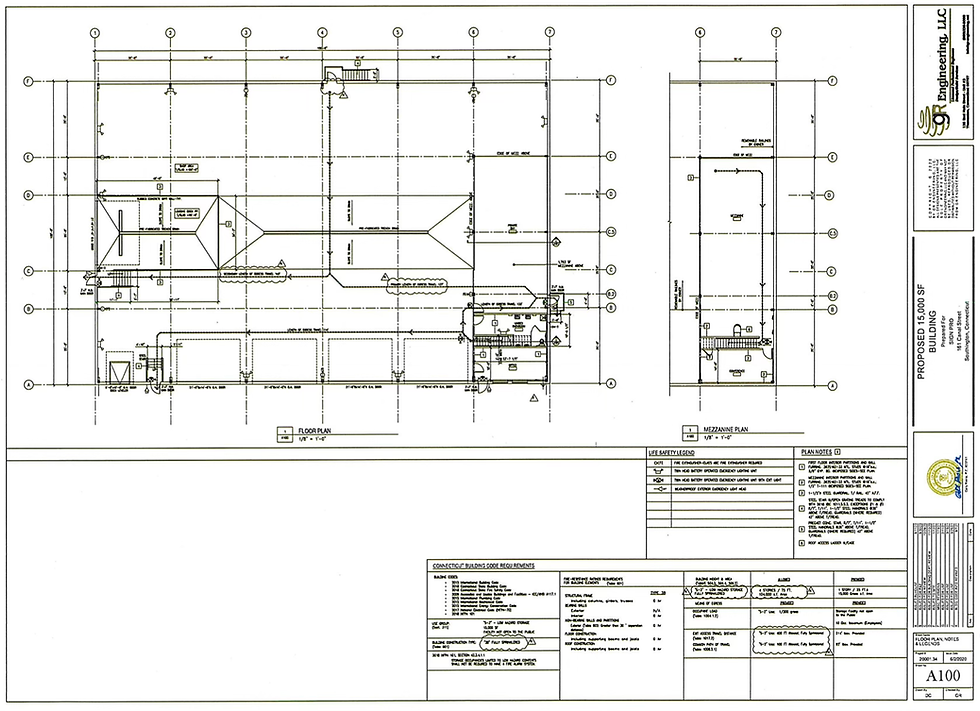
Three days later, on November 19, the Southington Fire Department completed a brief plan review and found it “to be in substantial compliance with the code.” A stamp shows that the Building Department received the Fire Department review the same day.

At some point, a handwritten note was added to the original permit application that states, “no storage of commercial motor vehicles allowed.” (See photo of original permit, above.) According to Southington Chief Building Official Jeffrey Pooler, that line was added to the document by another building official, John Smigel.
Smigel cited a section of the International Building Code that requires an automatic sprinkler system in buildings used to store commercial vehicles once the fire area passes 5,000 square feet. A brief document written by Smigel that is labeled PLAN REVIEW and dated December 14, 2020 makes a similar comment: ‘No parking of commercial motor vehicles, see IBC section 903.2.10.1.’
A few weeks later, on January 4, 2021, Building Official Jeffrey Pooler issued a building permit for the structure. The permit repeated the vehicle storage restriction, citing the same code section:

At the same time, the permit also noted that Fire Department approval had been received, and dated the receipt of it to Dec. 30, 2020.
Four months later, on April 12, 2021, another plan review conducted by the Fire Marshal’s office found the project “not in compliance.” The reviewer wrote that the building was supposed to hold only non-combustible sign materials, “per owner conversation.” Service vehicles could not be housed inside without a sprinkler system, the reviewer noted, adding that no sprinkler plans had been submitted to that point. The form was marked for forwarding to the Building Department. The document does not make clear whether Rappoccio was informed of the problem during the conversation.

Initial construction on the facility was completed sometime in the summer of 2021. In his testimony, Rappoccio said that Pooler came to the building for a final inspection that August. Pooler, he testified, observed vehicles inside the building and told him a certificate of occupancy could not be issued, saying that a sprinkler system would be needed to bring the space up to code for vehicle storage.
Rappoccio subsequently arranged for the installation of a sprinkler system at a cost he put at around $185,000 in court filings.
The final certificate of occupancy documents a change of use that allows commercial vehicle storage in areas over 5,000 square feet, with sprinklers both required and supplied. The approval itself, dated to December 15, 2021, was signed by Pooler on December 28.

Sign Pro’s Argument against the Town
The Annex Facility sits at the heart of Sign Pro’s broader argument that officials in multiple instances made additions to approved plans that caused delays and added unplanned costs.
The suit claims that officials applied the rules harshly to Sign Pro in retaliation for Rappoccio’s reporting of unpermitted signs around town. Sign Pro’s lawyers put the motive in their filing: “Because Sign Pro was shining a light on the Town’s failure to enforce its own rules and the Building Code, Defendants would subject Sign Pro to heightened scrutiny and additional requirements at almost every available turn.”
The filings lay out two different accounts of what the Annex project is supposed to show. Broadly speaking, Sign Pro’s response argues that the company was denied equal treatment under the law, as guaranteed under the 14th Amendment’s Equal Protection Clause.
More specifically, Sign Pro has raised a claim of municipal estoppel, which covers situations where officials point a property owner in one direction and then backtrack after the owner follows their instructions.
The company argues that the town’s own reviewers, including the fire marshal’s office and Pooler, reviewed the plans for 161 Canal St., determined that no sprinkler system was needed, and only reversed course after the building went up.
In its filings, Sign Pro points to the submitted drawings, which showed garage doors. It argues that “anyone reviewing the application should have known the building was meant to store motor vehicles.”
It stresses that the fire department approved the project’s plan in December 2020 without mentioning sprinklers.
It points out that the handwritten restriction on vehicle storage added to the application went unexplained in depositions. Pooler recognized the handwriting as Smigel’s, Sign Pro claims, but could not say when or why the line was added.
According to Sign Pro, Pooler’s visit in August 2021 marked the first time since the plans were initially approved that the town demanded sprinklers be installed before occupancy.
The company also stresses Pooler’s own testimony that, “for the first and only instance in his entire career,” he had “disagreed with the Fire Department’s conclusion and refused to allow Sign Pro to store motor vehicles in the building until a sprinkler system was installed.”
The company’s response argues that the shifting explanations for this and several other Sign Pro permits point to arbitrary and unequal treatment by the Town.
The Town’s Defense
The town, in its Memorandum of Law in Support of Defendants’ Motion for Summary Judgment, claims that Sign Pro applied for an equipment storage facility and that its engineer, Gary Reola of GR Engineering, presented the project on that basis. It says that the Town initially approved that exact use while advising during plan review that commercial vehicles could not be parked inside.
Any changes made along the way, the town’s filing argues, came from Sign Pro rather than the town. The town says that, by its own admission, Sign Pro kept a fleet of 20 to 25 vehicles inside a building as a core part of its operations. Under the building code, the sprinkler requirements are mandatory. The added conditions were a consequence of Sign Pro shifting from equipment storage to vehicle storage, not new demands invented along the way. If there was any miscommunication, the memorandum suggests, it was between Sign Pro and its own engineer.
Rappoccio’s own testimony enters into the town’s argument, with the memorandum citing his statements that Sign Pro regularly budgets for code compliance as an ordinary business practice. The town also cites his statement that storing vehicles without meeting the code would expose the business to a “hundred percent liability,” and that he weighed his options to avoid the sprinkler systems before deciding to install them.
The town believes those admissions indicate that Sign Pro understood all along that vehicle storage carried its own requirements. And since the final certificate provided Sign Pro exactly what it wanted once the work was done, the memorandum argues that the company suffered no real harm beyond ordinary compliance costs. It calls the claimed damages speculative and unsupported.
According to the town, Connecticut courts allow estoppel against a municipality only with great caution and when an official makes a clear and definite promise on which a property owner reasonably relies, with its reversal causing substantial harm.
It further claims that Connecticut courts will not allow estoppel to block a town from enforcing public safety rules, and that both the documentation requests and the sprinkler requirement fall under that heading.
One last defense offered by the memorandum is qualified immunity, a doctrine that shields individual officials from personal liability unless they violate clearly established rights. Everything the building department did, the document maintains, was routine permitting, inspection and enforcement work under the state building code – things such as evaluating applications, requiring documentation when needed, assessing safety requirements and approving projects once they comply.
In the case of the Annex facility, the town says it conditioned approval on compliance with the fire safety requirements and permitted use once the work was completed. No court has held that any of that violates the Constitution, it argues, which would protect Pooler and the other named officials even if the rest of the case went Sign Pro’s way.
A Pattern of Unequal Treatment? Or a System Working as Designed?
The dispute about construction at Canal Street and the town’s permitting process is just one of several cited in the case. Sign Pro argues that there was unequal treatment in the permitting of its work at other locations – Apple Valley Plaza, Calvanese Plaza, Riverstone Plaza, and M&T Bank – and that the pattern indicates that this was intentional.
The town, in turn, argues that in each case, unique, legitimate shortcomings had to be addressed by the company before permits could be granted.
Sign Pro’s case also rests on a number of other allegations meant to show that the treatment the company was receiving from building officials was either encouraged or given a pass by other officials in town. In 2022 and 2025, the lawsuit, which was originally filed against the Town of Southington and Jeffrey Pooler, was expanded to include four more officials, former Town Manager Mark Sciotta, current Town Manager Alex Ricciardone, former Town Council Chair Victoria Triano, and current Town Council Chair Paul Chaplinsky. Sciota and Ricciardone are represented in Sign Pro’s most recent filing as being aware of unequal treatment but doing nothing to stop it, and the company alleges that Triano promised advancement to a local Planning and Zoning official if they were to “slow-play” Sign Pro’s projects.
The town, in its Memorandum, refers to all these allegations as “untethered to any specific conduct relating to the permitting, inspection, or enforcement decisions at issue.”
The case is now in the hands of the judge, who must decide whether to grant the defendants’ request for summary judgment and dismissal, or to let it go forward.


