SHS Athletic Locker Rooms to Get State-Funded Overhaul
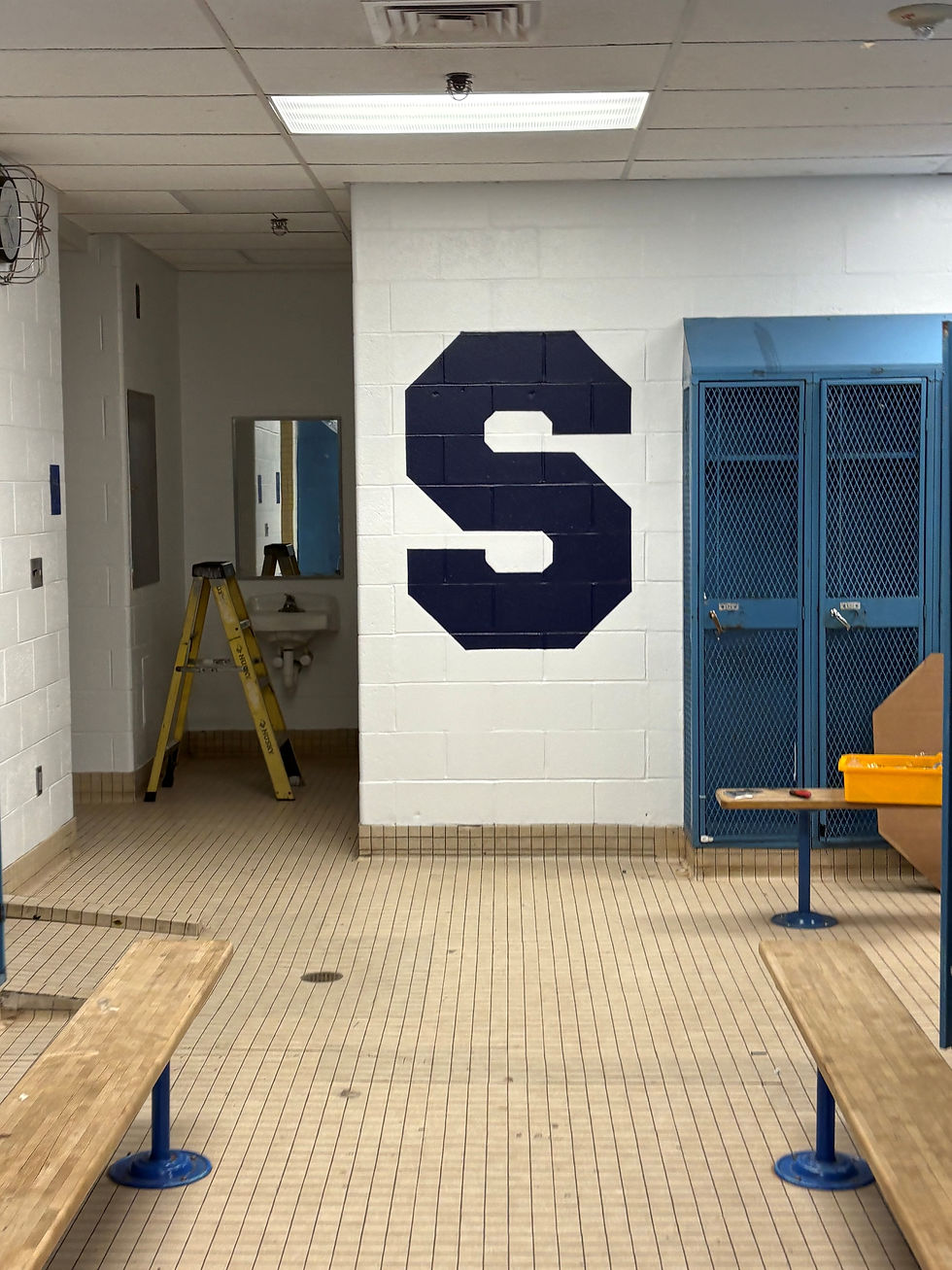
On Tuesday, the State Bond Commission voted to approve a long list of bond measures that includes $250,000 for the Town of Southington for a “locker room rebuild.”
The state funding was first announced by the office of 81st District Representative Chris Poulos in a press release dated September 1.
According to the release, “The funding… will support improvements to both the boys and girls locker rooms, with the goal of bringing both facilities to an equal standard of safety, cleanliness, functionality and quality. The proposal includes $150,000 for more extensive renovations to the boys locker room and $100,000 for improvements and preservation of the girls locker room.”
Issues with the athletic locker rooms grabbed attention at the end of last school year after some members of the BKF Gridiron Booster Club took a tour of the boys space.
Club member Jerad Paolino, whose son is a student athlete, described what the club had heard about the conditions of the facility: “My son always said, the lockers don’t lock. A lot of them don’t have doors. A lot of them are bent. I know that my son has had things taken out of his locker because you can’t lock them.”
What they saw confirmed the rumors. “When we went in,” Paolino said, “it looked like there had been no changes since I was here in ‘95. I saw the broken lockers. Seventy-five percent were unusable in terms of their ability to lock. There was rust on the lockers. The floors were filthy, the tiles were chipped. Some of the benches were broken off the floor. The walls were filthy, the ceiling tiles had stains.”
Shortly afterward, Athletic Director Bob McKee and Superintendent Steve Madancy inspected the space, documenting what they encountered in pictures, including the following:


Madancy said his initial plan for addressing the issues was shaped by his take on their cause. “The facilities were definitely in a state of disrepair. But my immediate reaction was, this isn’t a maintenance issue, this is a ‘students having some pride in their space’ issue. When there are metal benches bolted to the ground that are ripped out, when there’s eye black smudged on the walls, when there are ventilation pipes that are dented and crushed, that’s not a maintenance issue, that’s an oversight issue.”
“When I was a high school athlete,” Madancy said, “if you did something to the locker room, you were either benched, booted from the team, or the whole team had to pay for it. Kids that way learned to police one another, because nobody wanted to do that. I’m not sure that’s happened here the past few years.”
“My reaction was, we’re going to fix it, but the kids are going to be part of it. I told the AD, I think this summer the kids who use these locker rooms should put in some sweat equity. We will supply the material, we will work with them. But I think they are part of the solution here because they are far less likely to do this in the future if they own part of it.”
However, those plans went by the wayside after the Board of Education passed a new ‘pay-to-play’ fee, which put an additional financial burden on the families of student athletes. “Suddenly the Boosters were out, the kids were out,” Madancy said.
“So, over the summer we fixed the benches, we replaced all the ceiling tiles, we replaced all the plumbing fixtures, the toilet and sink handles. We power-washed for three days and repainted it all, including the logo. And we fixed all the ventilation pipes.”

Madancy acknowledged that fixing the lockers was beyond the capabilities of the maintenance crew, given that replacement parts are no longer made for them.
Paolino said he was grateful for the effort by the District to clean up the space. “Bob McKee is a great guy,” he said. “He was able to get it power washed. He had some lights and ceiling tiles put in. He cleaned up some of the fixtures. He did the best that he could do.”
“Still, lockers are expensive,” Paolino added. “You’re talking over $100,000 to remove and install. They don’t make the parts for them anymore. On top of that, you’re looking at a new floor, new fixtures for the showers.”
According to Paolino, the girls locker room was in much better condition: “The girls locker room is dated, but it’s in great condition, even though it’s the original. Everything is still functional and all the lockers work.”
Still, there is an issue of balance. “You have to make sure that if you do one,” Paolino said, “you have to do the other. The floors might need a recoat and the plumbing features might need something for the calcium deposits.”
He and other members of the Gridiron club worked with Poulos’ office to develop a proposal. “Chris took it up to the bonding office, he took it to the governor. One day he calls me and says, ‘we got it.’ I couldn’t believe it. This is great.”
Poulos said that the state grant specifies a total sum and purpose, but otherwise gives the town the flexibility it needs to determine how exactly the funds will be spent on locker room improvements.
Madancy welcomed the funding as well. “Regardless of how we got here, I’m really happy for the kids that we have funds to improve that space more than we improved it this past summer.”
Paolino stated that, going forward, he wanted to help facilitate communications. “I would like to partner with everyone involved to keep line communication open,” he said. “I think communication is key, because people are always asking ‘why are we doing this, why are we doing that?’ If I can alleviate miscommunication between citizens, booster club, the town, the school system, I’m happy to do that to make everything run smooth.”