top of page
A full house in the Assembly Room		PETER PROHASKA PHOTOS
A full house in the Assembly Room PETER PROHASKA PHOTOS

By 6:45pm Monday night, drivers were running out of places to park near Southington’s John Weichsel Municipal Center. Inside the assembly room, it was already standing room only. Once the public hearing got underway, Town Council Chair Paul Chaplinsky announced that the fire marshal had been notified about the crowd. A few people moved into the vestibule, while others stood aside to keep fire exits clear.


The crowd, which appeared to be close to the 140 people the room is allowed to hold, was mostly present to send a message: a reduction of the proposed schools budget was not going to be accepted quietly. About thirty students, educators, parents and other community members stepped to the podium to argue against a $1.6 million reduction recommended by the Board of Finance; only two spoke about the effect of higher taxes on residents who would struggle to pay. Recognizing the strong feelings of the attendees, the Council voted in favor of Chaplinsky’s suggestion that the hearing be kept open while they consider how best to address what he called a “difficult” budget season.


Many speakers returned to a common set of points. Several spoke of the ways in which a budget reflects the “values” held by a community. Several echoed the Superintendent's warning that budget cuts would mean personnel reductions for as many as 22 people, especially in positions like literacy specialists and para-educators. They said that cuts would lead to larger class sizes, more stress for teachers, and worse outcomes for students, especially those in need of extra help. Lack of class options, including career-oriented vocational learning, would also negatively impact students.


One consequence of these changes, several residents said, would be a teacher exodus caused by burnout or the lure of better conditions elsewhere; fewer people might choose Southington as a place to live and raise families, which would lower property values. Such a cycle, it was suggested, could create a spiral from which a community might struggle to exit.


Other speakers warned that cuts might cause schools to fall out of compliance with state mandates. Cuts would impact students who qualify for Individualized Education Programs or other assistance and could lead to loss of grants. Failure to comply could mean even less state funding in the future - an especially important consideration as Southington voters decide this fall whether to fund the elementary schools project.


Colleen Clark, who sits on the Board of Education, kicked off the comment session by calling Superintendent Steve Madancy’s budget "as lean and transparent as can be,” and argued for fully funding the budget that her Board approved. A fellow Board member, Joseph Baczewski, echoed that, saying that the proposed reduction would send a message that his organization’s work is “worthless in your eyes.”


Though the crowd clapped after each speaker finished, the loudest applause of the evening was reserved for Ryan King, a student at John F. Kennedy Middle School. He had gone from needing extra literacy support earlier in his school career to carrying an A in Language Arts, he said. King spoke of the need to “disagree respectfully,” as he made a case against proposed cuts to staff members who help students like him. As for the suggestion of “pay-to-play” that could offset some of the athletics budget, he pointed out that not every family could afford those extra fees. Middle school athletics, King argued, is where students begin to make life-long friends in addition to learning skills. The most important reason for the Town to invest in the education budget, said King, is that “we’re the future generation of Southington.”


Students help lead the Pledge of Allegiance

Once the public hearing section of the meeting ended and the room had nearly emptied out, the Council still had its regular business to consider. Councilor Tony Morrison reported from the Ordinance Committee that it was still considering what to do about a noise ordinance, since it has come to light that the existing one is not enforceable because it lacks approval from the state. Another ordinance that would target the many small signs that Morrison said “litter” Southington’s landscape is also being considered. Town Manager Alex Ricciardone said he personally picks up many of them for disposal.


The Ordinance Committee also moved to consider cost recovery for fire services by bringing the issue to the full Council.


School finances appeared on the agenda again when Ricciardone reported on a recent meeting in Hartford involving legislators and the School and State Finance Project, a non-profit that seeks to address educational funding shortfalls in the state. The issue of ECS, education cost sharing, affects most districts in Connecticut, since the formula used to disperse funds for education hasn’t changed since 2013, per Ricciardone. This might be changing soon, he said, to help communities like Southington that are in the midst of hard budget decisions regarding school expenses. As Councilman David Zoni remarked, “It’s an election year, so I think that we got a good shot.”


Ricciardone also addressed a comment made earlier in the meeting regarding the Manager’s contingency fund, usually $1 million. That has dwindled this year to around $20,000, primarily due to ice and snow removal expenses during a tough winter. He pointed out that having money that can be shifted as needed — usually with Board of Finance and Town Council approval — without affecting departmental budgets is standard practice for towns like Southington.


A tax abatement was also unanimously approved for American General Investors, a company putting in a new building on a vacant parcel in the economic development zone. Town Manager Alex Ricciardone said the company would be creating around 26 jobs. Though the seven-year abatement is 100% for two years, that drops off to 50% in year three.


After more than three hours the night was not yet over for Council members and other officials, who entered executive session to discuss litigation matters.


The next meeting of Town Council is scheduled for May 11, when a final vote on the budget is expected.





Superintendent Madancy at the podium Thursday night		TOWN OF SOUTHINGTON VIDEO
Superintendent Madancy at the podium Thursday night TOWN OF SOUTHINGTON VIDEO

Southington Board of Education member Colleen Clark pulled no punches when she described her reaction to the $1.6 million cut to the District’s budget proposed by the Board of Finance: “I think of [former Board of Finance chair] Phil Pomposi who would say, it’s a bad year every year. But this, quite frankly, is the worst I’ve ever seen it. I’ve been doing this for a while, and this just makes me ill.”


At a special meeting held last Thursday night, the Board of Education discussed what such a cut would look like in terms of personnel and service reductions. As Board Chair Zaya Oshana indicated, the meeting was timed to ensure that the potential consequences were made public before the Town Council started debating whether or not to accept Finance’s recommendation. Superintendent Steve Madancy gave a slide presentation outlining what he thought the proposed reduction would involve.


Since expenditures on personnel make up the lion’s share of the school budget, achieving a $1.6 million reduction would require the district to both cancel any planned hires and eliminate existing teaching and staff lines. First to go would be the 4.3 new lines that the Board of Education had approved: a social worker, a special education teacher, a TESOL teacher for students with limited English, an elementary school teacher, and one-third of a line for a high school business teacher. Together those cuts would save about $320,000.


SOUTHINGTON SCHOOLS SLIDES

In addition, the district would have to trim the equivalent of 22 full-time positions, broken out as follows:


Speaking of the six vacancies that would be created by layoffs or retirements, Madancy said that he could not yet identify which schools would be affected, since a final decision would have to await summer enrollment reports.


Cutting these 22 positions would save the District another $1,340,000. That plus savings from the elimination of the new positions would cover the reduction proposed by the Board of Finance. A further step Madancy wanted the district to look at in May is a pay-to-play fee for students who join athletic teams. While no details for this were given, it was included in the slides as a revenue item amounting to $50,000 per year.


After the presentation, Madancy fielded comments from members of the Board. Dawn Derynoski-Anastasio asked whether any lines from central office could be cut to save money. Madancy treaded delicately around the question, saying that the answer was yes, but that he did not include the position in his list “out of fairness to that person,” in the same way that he would not want to identify by name any teachers or janitorial staff who might be laid off.


Bob Brown then asked whether Madancy had considered adding a fee for students who park in the high school parking lot. The Superintendent replied that while he had entertained the idea, he felt it would be unfair to the parents of students who have just seen their tax dollars go towards the construction of a new lot.


Opposition to the cut was bi-partisan, at least among Board members who spoke up at the meeting. Clark, the head of the Republican caucus, underscored what a setback the loss of teaching assistants would be for the implementation of the District’s new reading curriculum. Sean Carson made a more general point about Southington’s financial commitment to education, stating that while neighboring districts spend between $22,000 and $25,000 per student each year, Southington spends less than $20,000 per pupil, “and we’re sitting here discussing… a $1.6 million reduction.”


There are several reasons that the Board of Finance voted to recommend a $1.6 million cut to the Board of Education’s proposed budget. One is to keep a forthcoming property tax increase as low as possible. A second is to alleviate the extra tax burden placed on the owners of modestly-sized properties by revaluation. Finally, residents and elected officials have commented in passing that the District’s demands are beginning to compete with each other, now that the town has agreed to fund construction of a new parking lot and tennis complex at the high school, and is looking to move forward with a costly elementary school rebuild, should it be approved in November at a referendum.


One wild card in these deliberations is whether the State Legislature and Governor will agree on an increase in state aid to municipalities for education, also known as Educational Cost Sharing. A decision on this should be made by May 6. Were that to happen, the District might be able to afford more of its desired services and staffing – although it could also happen that the Town Council would leave the proposed budget cut in place, and in effect convert the state aid into a tax cut for residents.


Madancy’s final slide provided a list of important upcoming dates in the budgetary process:


  • Monday, April 27, Town Council Public Hearing

  • Wednesday, May 6, Legislative Session Ends

  • Thursday, May 7, Next Regular BOE Meeting

  • Monday, May 11, Town Council Adopts Budget

  • Thursday, May 28, BOE Budget Reallocation Meeting


FLICKR STOCK IMAGE
FLICKR STOCK IMAGE

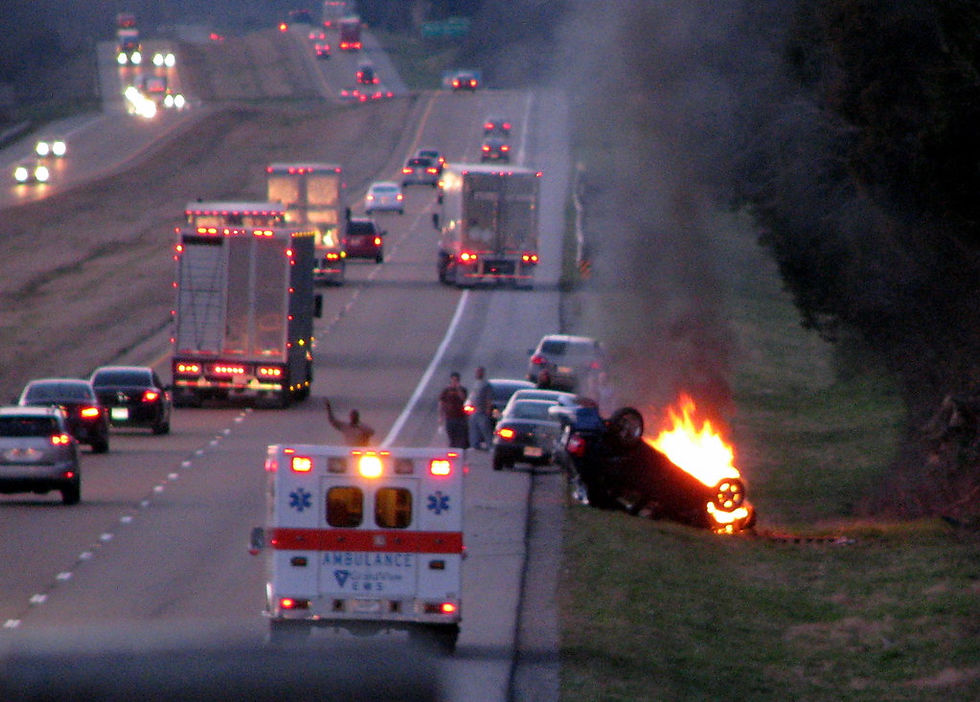
At its February 6 meeting, Southington Ordinance Committee member Steve Kalkowski reported on some interesting research he had conducted. It involved a vendor that would allow the Town to bill the insurance companies of drivers for services rendered by the Southington Fire Department at incidents on local roads.


Kalkowski presented the following case: Each year there are between 400 and 500 vehicle accidents on town roads and highways (including I-84 and I-691) which the Southington Fire Department responds to. Some responses involve monitoring the accident to make sure there is no vehicle fire, while others are more intensive, involving, say, an extrication. All of these calls cost money – about $700 to $1,200 dollars each.


Kalkowski had heard about a nationwide vendor that helps towns recover some of these costs by sending bills to the insurance companies of the at-fault driver, or the drivers themselves, if they are uninsured. The vendor claimed that the companies pay about 70% of these submissions. The firms takes 22% of this payment as its fee, and sends the town the other 78% in a lump-sum payment at the end of each month.


The new revenue could be substantial. For example, if there were just 200 payments per year of $700 each, that would mean, after the vendor’s cut, the town would receive $109,200 per year. That figure is very close to the cost of one firefighter once salary, benefits, and retirement are figured in.


After the briefing, committee members weighed the idea. The initial response was quite favorable – it was, in a sense, free money.


But then potential issues began to bubble up. Commissioner Lisa Cammuso pointed out that it would seem unfair for town residents who already pay taxes for Fire Department services to have to pay additional monies, either directly or via their insurance – and for a service that they cannot even opt out of. A few members wondered whether it be more fair to exclude town residents, and only charge non-residents. Kalkowski cautioned that it was best to avoid the complications such a distinction would entail.


During public comment, one resident said that it was a slippery slope – that once you start charging for one kind of Fire Department service, it is just a matter of time before financial pressures lead to more charges for services that people have taken for granted.


Not wanting to rush a decision, Chair Tony Morrison asked that members of the Committee give the matter more thought, and asked Kalkowski to see whether any other towns in Connecticut that recover expenses like this could share their experience.


Fire Recovery USA Joins the Conversation


The Ordinance Committee brought up the matter again at its April 22 meeting. This time, three more experts joined the conversation. In the front row, Southington Fire Department Chief Scott Lee was joined by New Britain Fire Department Chief Raul Ortiz, who had come to report on New Britain’s experience with the cost-recovery system. On the speakerphone was Mike Rivera of Roseville, California. Rivera is the Chief Business Development Officer of Fire Recovery USA, a firm that offers the recovery service.


The Ordinance Commission listens to Rivera on speakerphone	 PHILIP THIBODEAU PHOTO
The Ordinance Commission listens to Rivera on speakerphone PHILIP THIBODEAU PHOTO

Rivera began by making a pitch for his company’s services. He said that over 2,000 fire departments in 43 states are served by companies in his industry. He stressed that there would be no cost to the town to start the service or to quit. All that would be required would be for someone in the Fire Department to spend a few minutes inputting data collected at the scene of an incident by the Police Department. In addition, the town would need to pass an ordinance spelling out the policy of charging for services rendered by the Fire Department.


Rivera also made an interesting claim: most auto insurance policies, he said, already cover expenses associated with fire fighting, which means some percentage of every driver’s premium is reserved for this purpose. All his firm is doing is asking the companies to make good on their policy obligations.


At that point Commissioner Chris Palmieri asked Rivera: if that is the case, isn’t it a violation for insurance companies not to be paying for fire department services already?


Rivera replied that insurance companies typically deny such claims, and that it takes some expertise to file a claim in such a way that it gets paid – expertise that Fire Recovery USA possesses.


He also asserted that while insurance companies can raise a driver’s rates for being in an accident, they cannot raise them further just because of an “extra bill” like this one. At several points he claimed that implementing a cost-recover program would have no specific impact on the rates paid by drivers in the area.


New Britain Shares Its Experience


Finally the Commission invited Chief Ortiz to speak about New Britain’s experience with the program. Ortiz did not voice any complaints about the service, and said that it does work. However, he said, New Britain only receives about $25,000 per year in reimbursements – about one-tenth of the amount, $245,000, that Rivera said that Southington could take in if it contracted with his company.


Ortiz said there were two reasons for this relatively low level of revenue. First, New Britain does not put in claims for incidents involving residents, or the uninsured. Second, there is constant turnover at the position of the person responsible for submitting reports to Fire Recovery; as a result, it takes them some time to get into the habit of sending in the information, and the process is “not efficient.”


A Recommendation To Consider


While some questions remained, many were answered. If Rivera could be believed, adoption of the service would not have any impact on the premiums paid by drivers who are involved in incidents on Southington’s roads. The town would have another revenue stream, though not necessarily a large one. Chief Lee and Captain James Armack of the Southington Police Department also confirmed that it would be feasible for the Police Department, which collects information on drivers and their insurance at accidents, to pass that information along to the Fire Department for submission.


All of the members of the Committee voted to refer to the Town Council a recommendation that it consider using Fire Recovery USA’s services to bill the insurance companies of all drivers who require Fire Department assistance after incidents on Southington roads.


Editor's note: the original version of this article incorrectly gave the name of Commissioner Steve Kalkowski as Steve Walowski. We regret the mistake.


© 2026 The Southington Outsider        Logo image by CTDroneSource 


We pledge that all writing and images produced by staff of The Southington Outsider are created by humans, not by AI. We recommend, but cannot guarantee, that user-submitted Opinions, Tributes and Posters adhere to this policy. 


The Southington Outsider does not collect, use or share any individually identifiable data related to your browsing of this site. Wix, our hosting platform, has a separate privacy policy

bottom of page