Southington’s Bears are Good News and Bad News

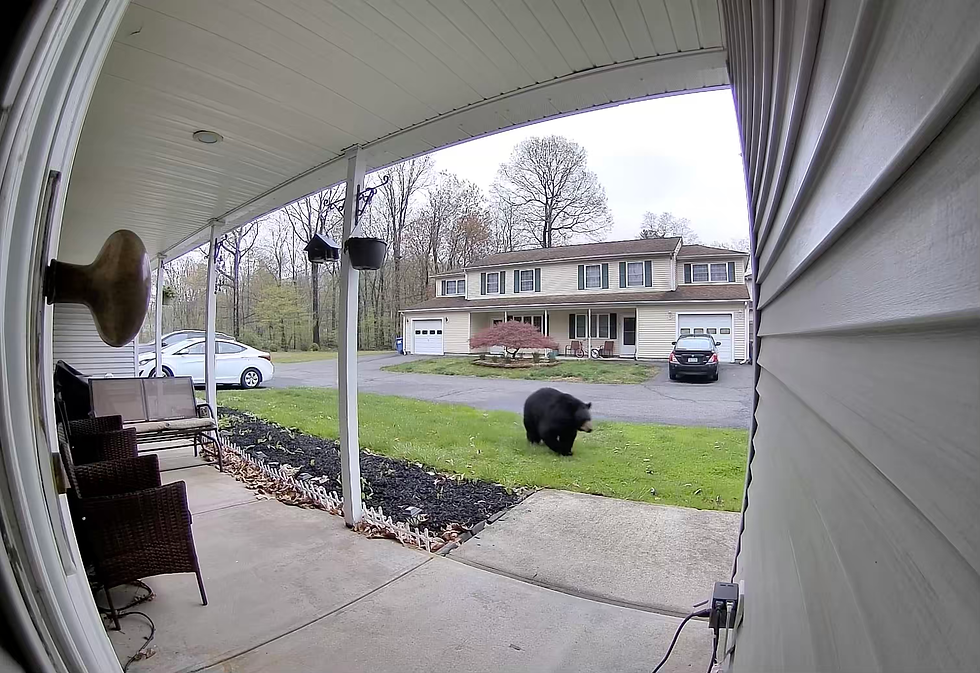
Southington residents encounter black bears on a fairly regular basis these days. In response to a request from the Outsider for pictures or videos of bears, more than a dozen people reached out. Below are two videos taken earlier this spring:
In the vast majority of cases, humans and bears come away from these meetings none the worse for the wear. On occasion however the encounters turn more tense. Sue Cyr described one such close call: “I had an encounter with a bear while in my fenced-in backyard with six of my daycare children playing outside. The noise of their laughter didn’t deter the bear. He walked through as if he owned the yard! My husband and neighbor tried clapping their hands to get him to leave but instead he got scared and climbed up a medium-sized tree. Branches were breaking as he tried climbing as high as he could.”
Southington’s bears may be cute and fun to watch, but they are powerful creatures and potentially dangerous. On March 25, Mark Ramsay, who runs The LEAF educational farm on Blueberry Lane, reported that a bear had slipped through an electric fence surrounding his apiary and smashed the beehives while looking for honey. “At the LEAF last year,” he wrote on Facebook, “we completely rebuilt our apiary and installed a high powered electric fence. Spring is here and the bears are back in town. Yogi is smarter than your average bear. He dug under the back side of the fence to crawl in last night and trash the apiary. 'Beary' frustrating, but we have some new ideas to keep the bear out that we will try out this year after we rebuild.”
Watch - and Haze.
Southington resident Ruth Cyr works as a tax preparer in town. She also helps run Wolf Central, a non-profit group “dedicated to educating the public about the wilderness around them and how to coexist with it.” Much of its focus is on teaching people about the mammals they may encounter in their backyards, especially ones that can be troublesome like skunks, coyotes, and bears.
Cyr recently took a break from her tax work to talk to the Outsider about humans and bears. She said that when it comes to educating people about bears, she has two main goals: “We need to learn to watch them from a distance. And we need to learn not to feed them or to encourage them to come up to people.”
“One thing we teach people,” she went on, “is how to properly haze wildlife. Wildlife hazing is done by noise and movement. If you’re out in the back yard, and there’s a bear, bang two things together. Bang two pots, clap your hands, use your voice, make a noise, wave your arms around to look bigger. That way the bears look at you and they’re like, ‘what is wrong with that two-legged animal over there?’ and wander off. But don’t stop. You have to continue your hazing until they’re out of sight.”
“What they learn are that those ‘two-legged’ animals are weird, and then they tend to stay away from us. Not just you, but all two-legged animals.”
Don’t Feed the Bears
Cyr was up-front about how well-meaning attempts to provide bears with food can backfire, often with tragic consequences. “Too many people leave some food out in the backyard because they want to see the bear,” she said. “The bears that lose their fear of humans are the ones that ultimately have to be put down by animal control. They say ‘a fed bear is a dead bear,’ and that’s why. Feeding them is ultimately a death sentence.”
“Bring in the birdfeeders,” she advised. “Bears eat different things at different times of the season depending on what’s available. They go after berries and seeds. There’s plenty of food out there for the birds. People love their birds, but if you know there is a bear in the neighborhood, bring your feeder in for a month. Don’t let that bear know there’s a McDonalds hanging from a tree in your backyard. They look at it as an easy meal.”
“That is the way predators like bears and coyotes look at our pets, and our bird feeders, and our grills, as an easy meal. That grease trap under their grill? A bear can smell it from miles away. That is often what attracts them into your yard.”
“If a bear finds the feeder or the grease trap, they may decide that they like that restaurant, and they’re going to stop there on their rounds every night, every week. Bring your bird feeder in for a month – that’s how they learn that that restaurant has closed down, and they can skip it now.”
Trash is another temptation for hungry animals. “Leaving your trash out is inviting them into your backyard. Keep it in the garage with the door closed, or leave it inside until trash day, so that it’s not lingering. They make ‘bear-safe’ garbage cans, but there’s nothing funnier than watching a bear show how un-‘bear-safe’ it is.”
“I’ve gone to home-owner associations that have a bear problem, and when I talk to them, I find that everybody knows the one person who is feeding these animals.”
“Say you live in unit 2H and you are putting leftovers out for the wildlife and you go away for the week. The bear is going to come back. If he doesn’t find any food, he is going to try the other units nearby to see if they have food.”
Between food that is put out intentionally and food left lying around, bears have a lot to choose from these days. “Animals breed when food is in abundance. I recently saw an article about a bear with five bear cubs, which is unheard of. That bear has access to a whole lot of food. It comes back to us.”
Pets and Bears Don’t Mix
Cyr was also frank about the risks that bears pose to pets when they are outside: “Watch your children and pets. Your cats should not be outside. Your dog should not be outside without your being with them. Don’t let your dogs loose in the back yard. A four-foot fence is nothing to a bear or a coyote. Look first before you go out with them at night.”
“Your dog is an easy meal for a bear. That may sound terrible, but your dog is domesticated and doesn’t know how to fight. A lot of times when a bear goes after a dog, the dog is mostly a nuisance to the bear. The bear is like, ‘What are you talking about? Get out of my way.” Then a big swipe. But that big swipe can hurt your dog, it can kill your dog. The best thing to do is always be with them in the backyard.”
The risks to pets are another reason not to encourage bears to visit by feeding them. “You might enjoy the bears on your two acres, but your neighbor might have a small dog, and now that dog is in danger.”
Closer Encounters
As developers build homes deeper into the woods at the edge of town, the odds of bears and humans interacting increase. “The bears have corridors they go through,” Cyr explained. “When you remove a piece of that corridor, you remove their protection. But they’re still going to pass through. They could stay on the mountain, but what’s encouraging them to come down is food.”
So what should you do if you forget to lock your door, and somehow a bear gets into your house? Cyr paused for a moment to consider the scenario. “They’re probably doing that because they’re smelling your apple pie, your good cooking. I would call the police or DEEP. Meanwhile, go to the other end of the house and make some noise. You will never forget to lock your doors after that. Plus, you’ve got a story to tell.”