


LEAF’s Veggies are All-Natural - Just Don’t Say the O-Word

If it’s a Monday, Wednesday, or Friday afternoon betwee 3 and 6, and you turn off Bellevue Avenue where LEAF’s sign is, go down the dirt driveway to the lot, park by the chickens and the flower boxes and turn around, you will see LEAF’s market open for business, its tables of fresh vegetables filling the large brick workspace.
“We call this our On The Farm Market,” said LEAF farmer-in-chief Mark Ramsay. “We’re separate from Lewis Farms across the street, which we sold about 18 years ago. We’ve been doing this for six years.”

The market is just one way that LEAF gets its produce to customers. Another is its CSA, which supplies them with a box of vegetables each week for a season-long subscription. “The CSA is a drive-up and we make the boxes ahead of time,” said Ramsay. “We’re able to give out things for people to try, and we offer a recipe for them. People have loved it, we’ve had nothing but positive feedback. We have about 250 families. Every year it grows and grows.”
Ramsay said that any produce visiting customers don’t carry away is either sold or donated. “We do some wholesale. Some goes to restaurants, some gets donated to Community Services and Bread for Life. We’ve tried to do farm-to-school, but it’s hard: they want stuff that’s easy to use in kitchen and popular with kids – not things like brussel sprouts.”

One thing that distinguishes LEAF from other farms in town is its status as a not-for-profit. Everything that LEAF does, from its market to its summer camp for kids, falls under the umbrella of the nonprofit.
“Everything goes to the nonprofit,” said Ramsay. “We don’t have a separate unit. The farm and the education programs, the camps and the school gardens, are all one thing. Farming and education go together here. It’s one big machine, and it needs to be fed.”
The O-Word
If you pay attention to the operations at LEAF, you may notice the absence of some distinctive elements of modern agriculture – bags of fertilizer and tanks of chemicals. LEAF’s plants get all their nutrients from large quantities of compost, especially leaf compost. Bugs and other pests are kept at bay by strategic cultivation, without chemical applications. Which raises the question: are LEAF’s vegetables organic?
“Well, yes, but… I am not certified, so I can’t say the o-word,” Ramsay explains. “We’re more organic than most organic stuff. The plants have never been sprayed, there’s no fertilizer on them, there’s no herbicides on them.”
The reasons Ramsay can’t call his vegetables ‘organic’ involve economics, and bureaucracy. “You have to pay to get your organic certification, and they have some funny rules. They won’t let you use pressure-treated wood on the outside of the greenhouse to hold the plastic. It never touches the stuff that is growing, but you can’t use it.”
“The certified-organic stuff is coming down in price,” he continued, “while the non-organic stuff is going up, so there’s not an advantage anymore. That’s basically why we’ll never get certified. If anyone asks about the vegetables, we just tell them how they’re raised.”
Ramsay works hard to keep one step ahead of the bugs and pests: “We constantly rotate crops. If we see bugs beginning, we’ll till stuff under and move it somewhere it else. On kale, for example, at this time of year you start to see whitefly. So we’ll mow it under. We’ll wait, and plant it somewhere else. We hardly have any whitefly this year.”

“As far as keeping the weeds out, we have three old International Cub tractors with cultivators. The motor for the tiller is offset, so I can get within an inch of the vegetables while I’m cultivating. Besides that, if it’s summer, we’ll go out and hand-hoe – which is a lot of work.”
“Here’s one big advantage of our method,” he went on. “Certain herbicides work with certain vegetables. If you have tomatoes and you put down an herbicide, next year you can’t plant anything but a nightshade” – like peppers or eggplants – “in that spot, because some of that residual herbicide will stay there and it will take out the lettuce. So I don’t have to worry about that.”
“I rotate my crops and I keep a book of what’s planted so I know exactly where I planted everything. Let me show you the book. Sorry it's a little dirty, it gets a lot of use."

Food Fads
The decision of what to grow is made based on a blend of experience and experimentation. “It comes from years of experience" Ramsay said. "You learn what will sell. We used to grow 72 kinds of hot peppers; we cut that back to five. It’s about knowing what the public’s going to buy. I always dabble, just to try things.”
“Ten years ago, when we would grow kale, you couldn’t give it away. Now it’s as common as lettuce. Kohlrabi, same story."
“Kale was the superfood for a little while. Now they’re saying broccoli leaves are the new superfood. So if you get some of our broccoli, eat the leaves.”
“The colored cauliflowers are a fad, although they pretty much taste the same. Yellow squash used to outsell zucchini, now zucchini outsells the yellow squash. Fall fennel is quite popular. The fall is when it’s the sweetest," he concluded.


Farming and Gambling
Unlike business owners who are reluctant to share details of their operations, Ramsay is willing to discuss basically every aspect of LEAF, both the upsides and the downsides. “Farmers have no secrets,” he said.
“It’s seems very above-the-board here,” I told him. “I guess you’re not running a gambling operation.”
“It’s funny you should say that,” Ramsay replied, “because the only thing I can equate farming to is gambling. Because you’re going to put the work in, working with the crops, but you might not get the payout at the end. Every single year. A good year for a farmer is just getting to the next year.”
Currently For Sale
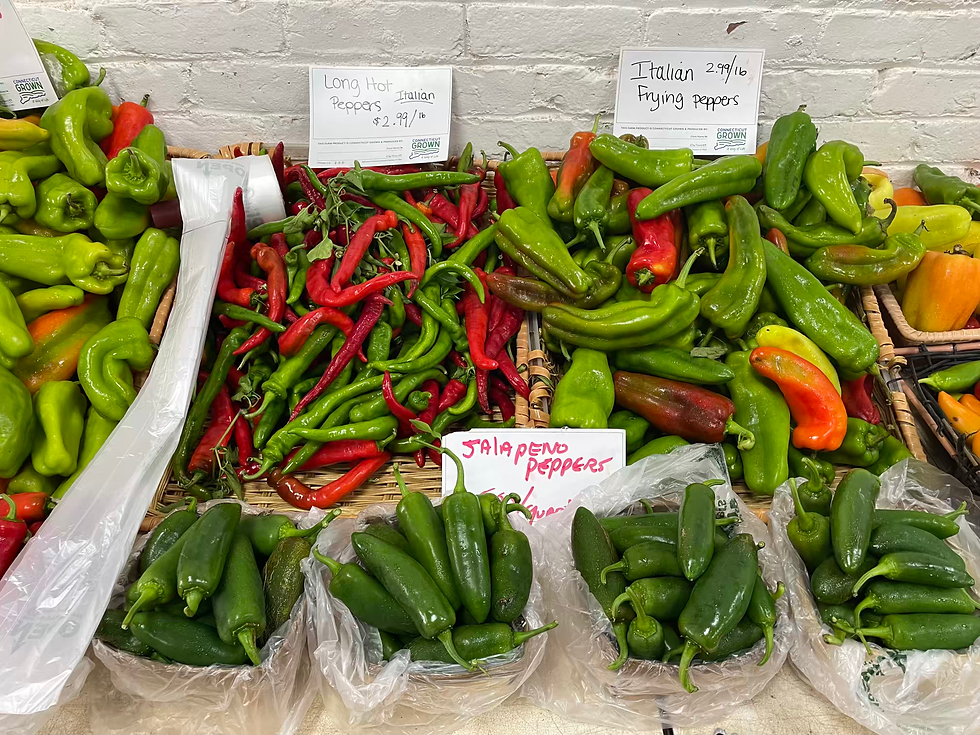
As with any farm stand, what LEAF has for sale changes throughout the season. On October 14, the tables had all the vegetables shown above, plus a selection of tomatoes, corn, and apples, and the following:


